
Advocacy
Shifting the Narrative. Demanding Justice
The former Assad regime sought to distort the legitimate aspirations of Syrians who stood up for freedom and dignity through a wide range of propaganda efforts. Citizens demanding reform were routinely portrayed as “terrorists,” while the causes and legitimacy of their demands were deliberately misrepresented in an attempt to shape international opinion.
In response, SSJ has carried out numerous awareness-raising initiatives and public events in Japan and internationally, working to expose the realities of state violence and stand alongside the Syrian people through the building of international solidarity.
These activities have been featured across Japanese, Syrian, and international media, as well as at civil society forums around the world. At the same time, they have carried significant risks. SSJ was placed on blacklists maintained by the former Assad regime, Russia, and Iran, and became the target of threats, intimidation, and smear campaigns.
Despite these challenges, we did not scale back our activities. We believe that pursuing truth and justice is an unwavering responsibility. We are equally committed to ensuring that the voices and experiences of survivors are not left behind. SSJ believes that a just future for Syria can only be built through an honest confrontation with past human rights violations and a commitment to respecting the rights, dignity, and voices of victims and survivors.

Your support matters.
Every donation brings us closer to justice and dignity for all Syrians.
Advocacy
we WILL continue to speak out because silence is not an option.
1.
Pursuing Truth
We work to restore and protect the right of Syrians who have endured immense hardship to tell their stories and have their experiences acknowledged.
SSJ supports survivor- and victim-led advocacy initiatives that seek truth, reparations, and justice, ensuring that those most directly affected by human rights violations play a central role in shaping the pursuit of accountability.
2.
Amplifying
Syrian Voices
SSJ works alongside survivors, activists, and legal experts to promote greater understanding of Syria through participation in domestic and international forums.
Through public events, media engagement, and educational initiatives, we seek to challenge misinformation and distorted narratives while ensuring that Syrian perspectives remain at the centre of public discussion.
3.
More Than 100
Public events
SSJ has organised more than one hundred public events, including academic seminars, film screenings, and online campaigns.
Through these initiatives, we promote awareness of justice-related issues in Syria and help strengthen international solidarity with Syrians seeking freedom, dignity, and accountability.
4.
Raising Awareness
of State Violence
Through investigations conducted by the SSJ Justice Unit, as well as partnerships with human rights organisations, victims’ groups, and legal experts, SSJ works to document and communicate the realities of large-scale state violence and systematic human rights violations committed in Syria.
We also advocate for survivors’ voices to be reflected in international justice mechanisms, transitional justice processes, and public decision-making related to accountability and human rights.
5.
Policy Advocacy
Through participation in policy dialogues, international conferences, and the publication of official statements, SSJ provides governments and policymakers with accurate information about Syria.
We advocate for policies that reflect the perspectives of survivors and local communities, ensuring that those most affected by the Syrian Crisis are included in discussions that shape Syria’s future.

Concert and Cultural Exchange: A Performance by Aeham Ahmad (2018)
SSJ invited renowned Syrian-Palestinian pianist Aeham Ahmad, widely known as “The Pianist of Yarmouk,” to Japan.
Born and raised in the Yarmouk refugee camp in Syria, Ahmad became internationally recognised for performing music amidst the ruins of war-torn communities. His music not only conveyed the tragedies experienced by Syrians, but also demonstrated the resilience, dignity, and humanity of those who endured them.
After overcoming significant logistical and visa-related challenges, SSJ organised performances in both Tokyo and Hiroshima. More than 1,500 people attended the events, which served as powerful opportunities for cultural exchange, solidarity, and public engagement with the realities facing Syrians.
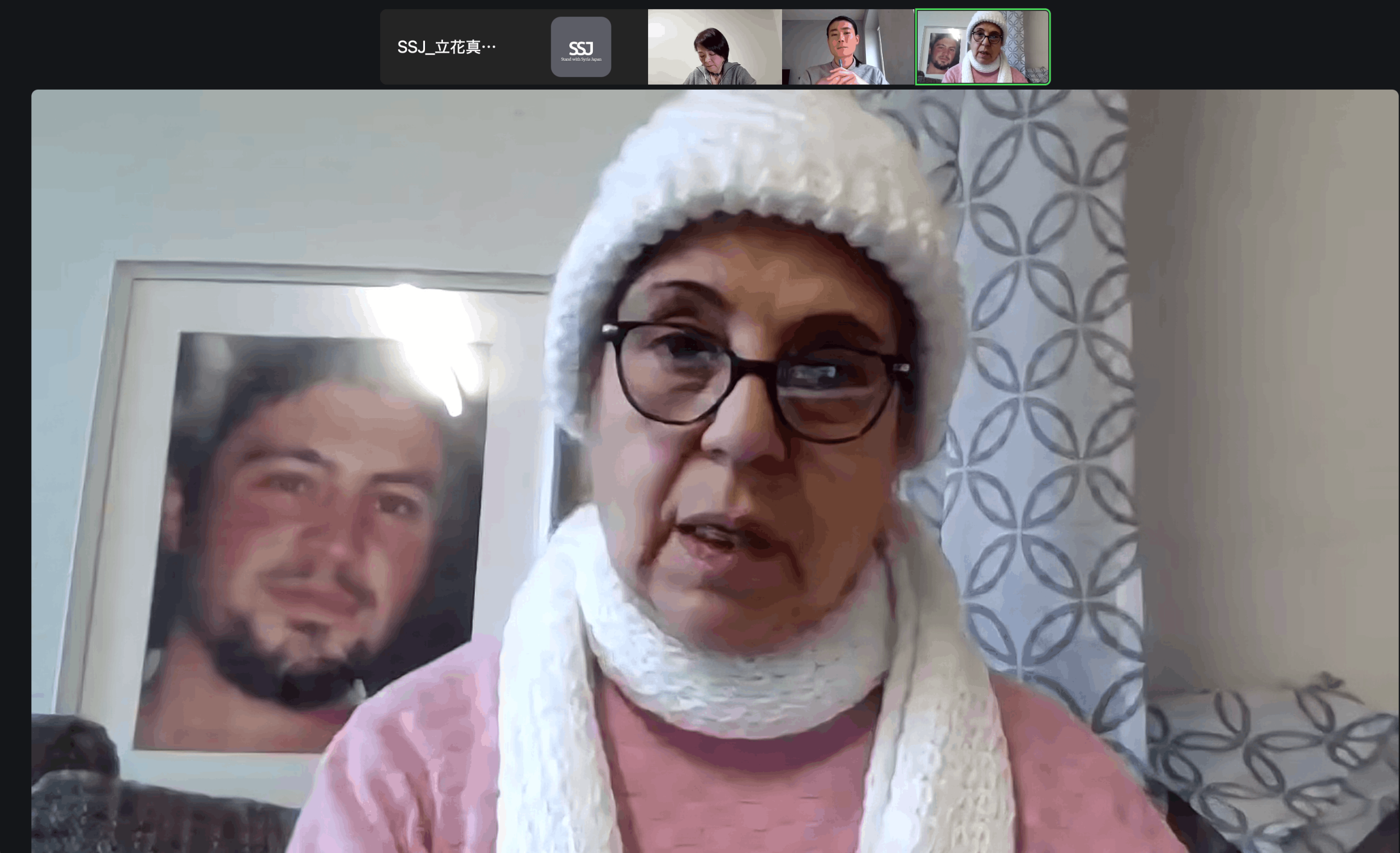
Online Seminar: Global Advocacy The Future of a New Syria — Three-Day Seminar (2025)
Following the Liberation of Syria on 8 December 2024, SSJ convened a high-level online seminar bringing together civil society leaders, human rights advocates, and legal experts to discuss justice, recovery, and accountability in post-crisis Syria.
Over the course of three days, participants explored key challenges and opportunities facing Syria’s future, engaging in discussions on transitional justice, reconstruction, civil society, and democratic governance.
Guest Speakers
• Raed Al Saleh — At the time of the seminar, Head of the Syria Civil Defence (White Helmets); currently Minister of Emergency and Disaster Management
• Ibrahim Olabi — At the time of the seminar, international lawyer specialising in criminal accountability and international justice; currently Permanent Representative of Syria to the United Nations
• Mariam Al-Hallak — Founder and President of the Caesar Families Association (CFA)
• Buntaro Kuroi — International conflict journalist
• Ahmad Jalal — One of Syria’s leading caricaturists, political cartoonists, and civil society activists
Protests & Campaigns
Standing Up, Speaking Out, Taking Action
Freedom for Those Detained in Assad Regime Prisons
Truth and Accountability for Syria’s Forcibly Disappeared
Advancing International Accountability for Serious Crimes
Hunger Strike and Demonstration
Standing for Justice Through Non-Violent Protest
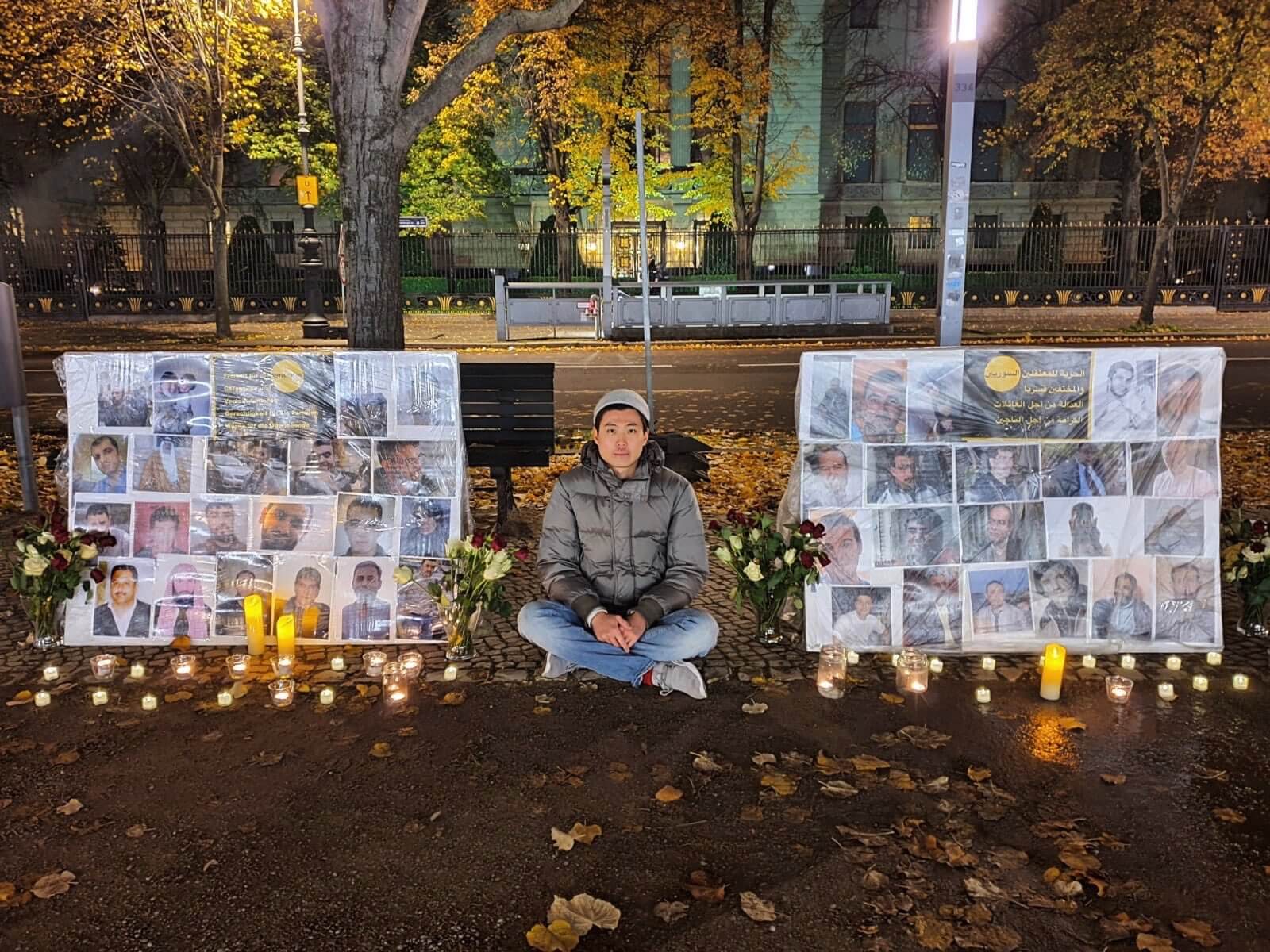
In 2020, SSJ Founder and CEO Icchiku Yamada undertook a four-day hunger strike in Berlin in solidarity with more than 130,000 Syrians who had been forcibly disappeared under the former Assad regime.
With the support of Syrian civil society organisations, including The Day After, Caesar Families Association, Families for Freedom, and Jawab, the protest was held in front of the Russian Embassy. Participants called for the immediate release of detainees, the right of families to know the fate of their loved ones, and accountability for all perpetrators, including Bashar al-Assad.
Families of the forcibly disappeared, survivors, and supporters gathered carrying photographs, roses, and candles. The demonstration became a powerful symbol of solidarity, resistance, and the enduring dignity of those who refused to surrender to oppression.
Advancing Justice for Victims of Chemical Weapons Attacks
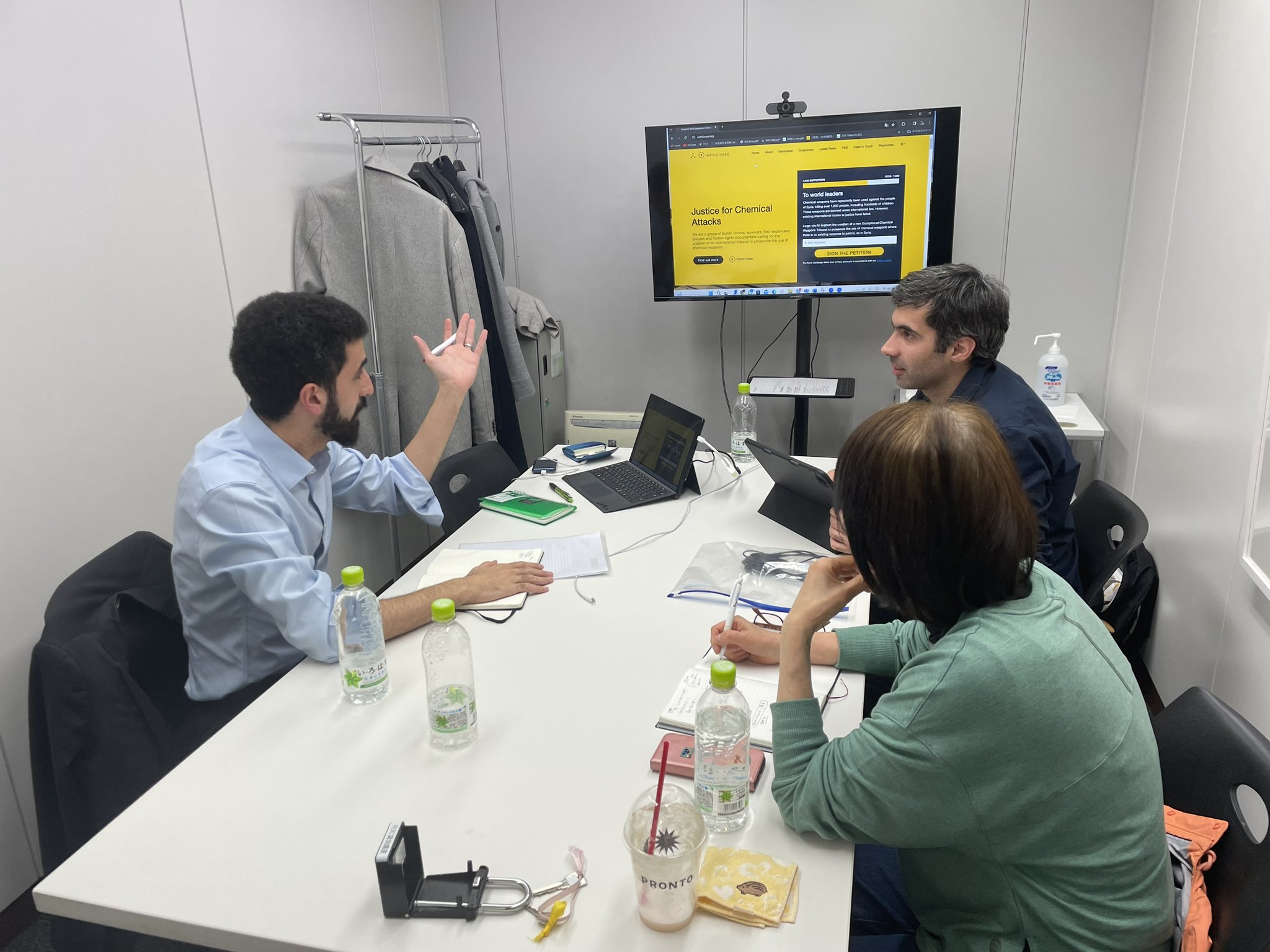
In April 2024, Syrian international lawyer Ibrahim Olabi visited Japan and held strategic consultations with SSJ.
The discussions focused on promoting the establishment of a Working Group on International Criminal Accountability for the Use of Chemical Weapons. Shortly after these consultations, Japan formally joined twelve other countries in supporting this new intergovernmental initiative.
For victims and survivors of chemical weapons attacks, including the 2013 Ghouta massacre, this represented an important step towards justice and accountability. It also contributed to laying the groundwork for future accountability mechanisms, including the possibility of specialised tribunals and other international legal processes aimed at addressing serious human rights violations committed in Syria.


